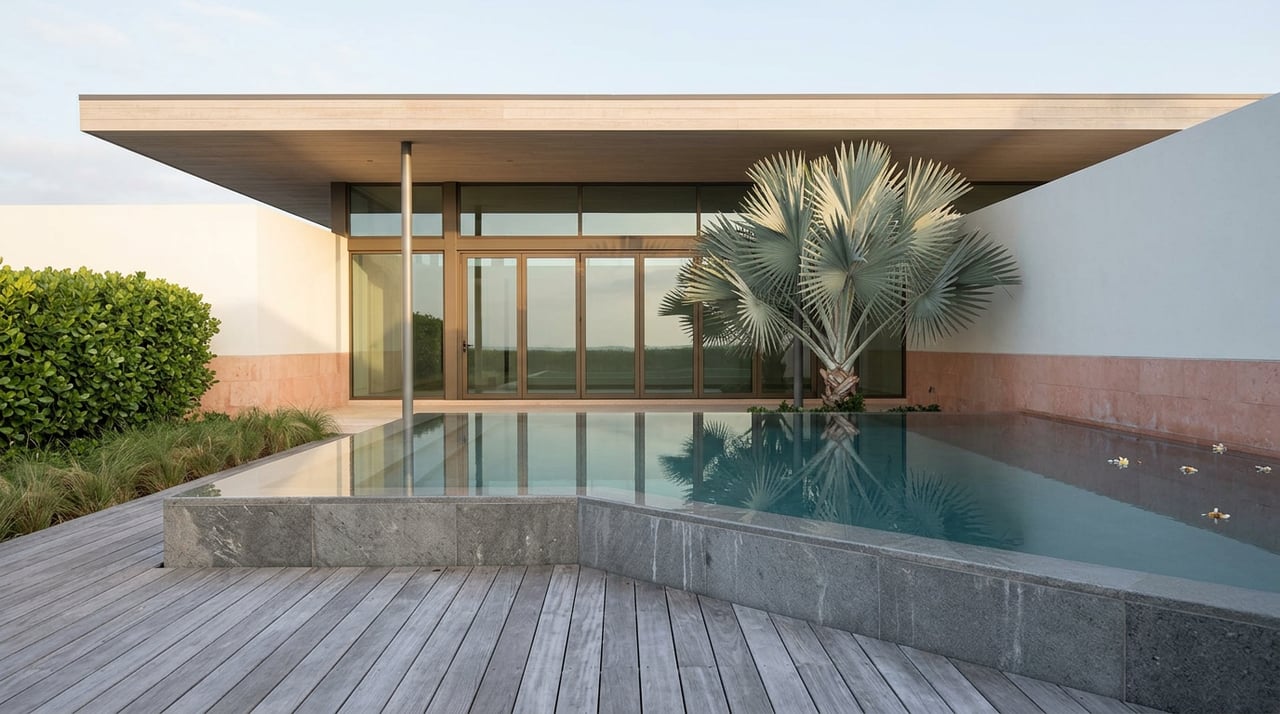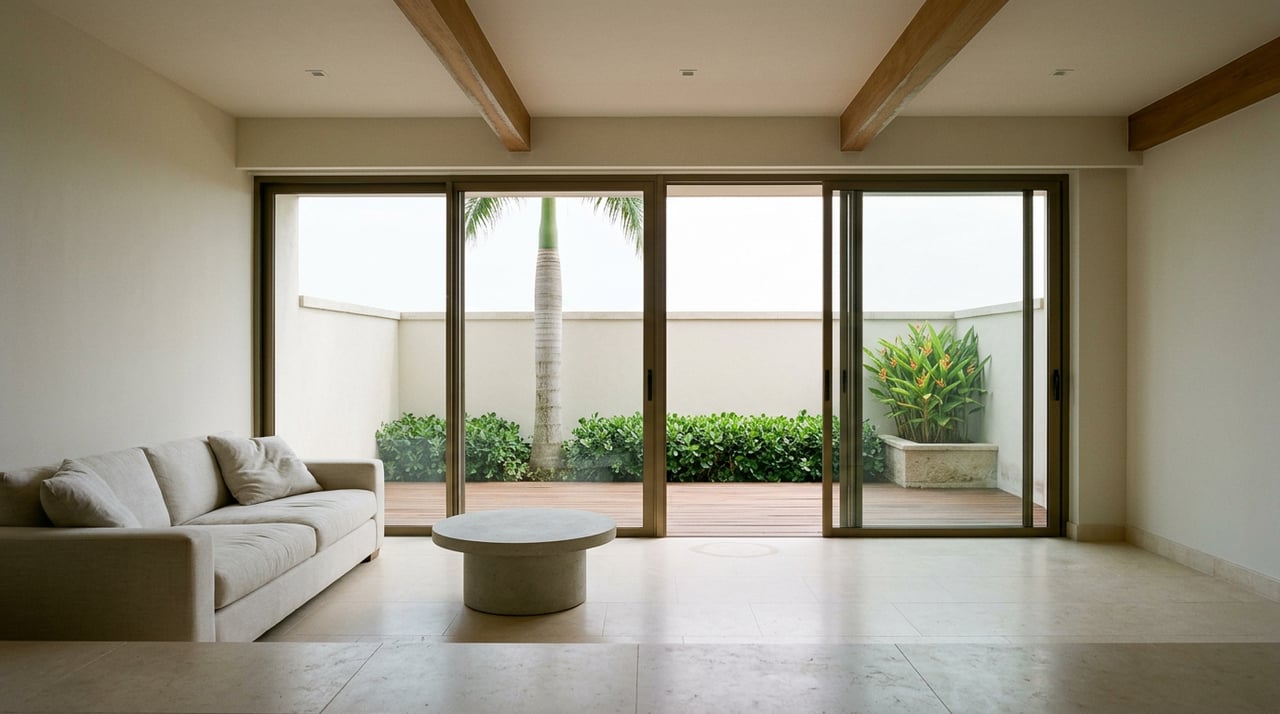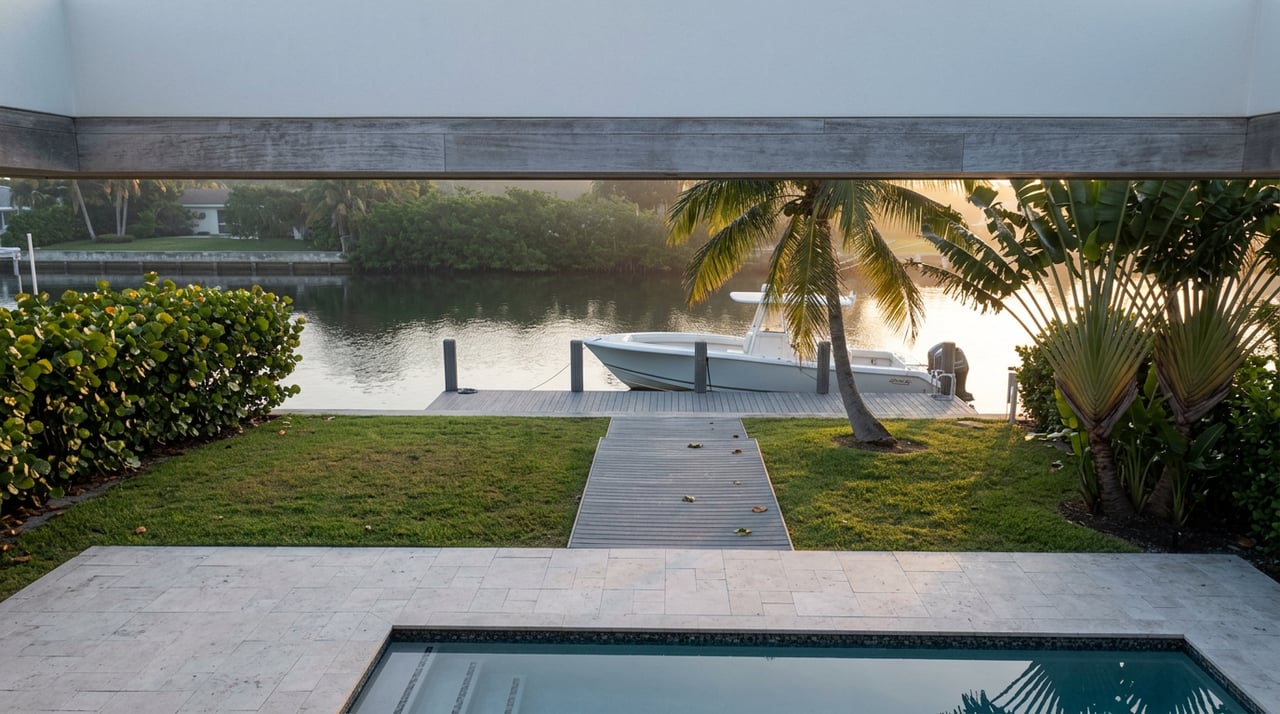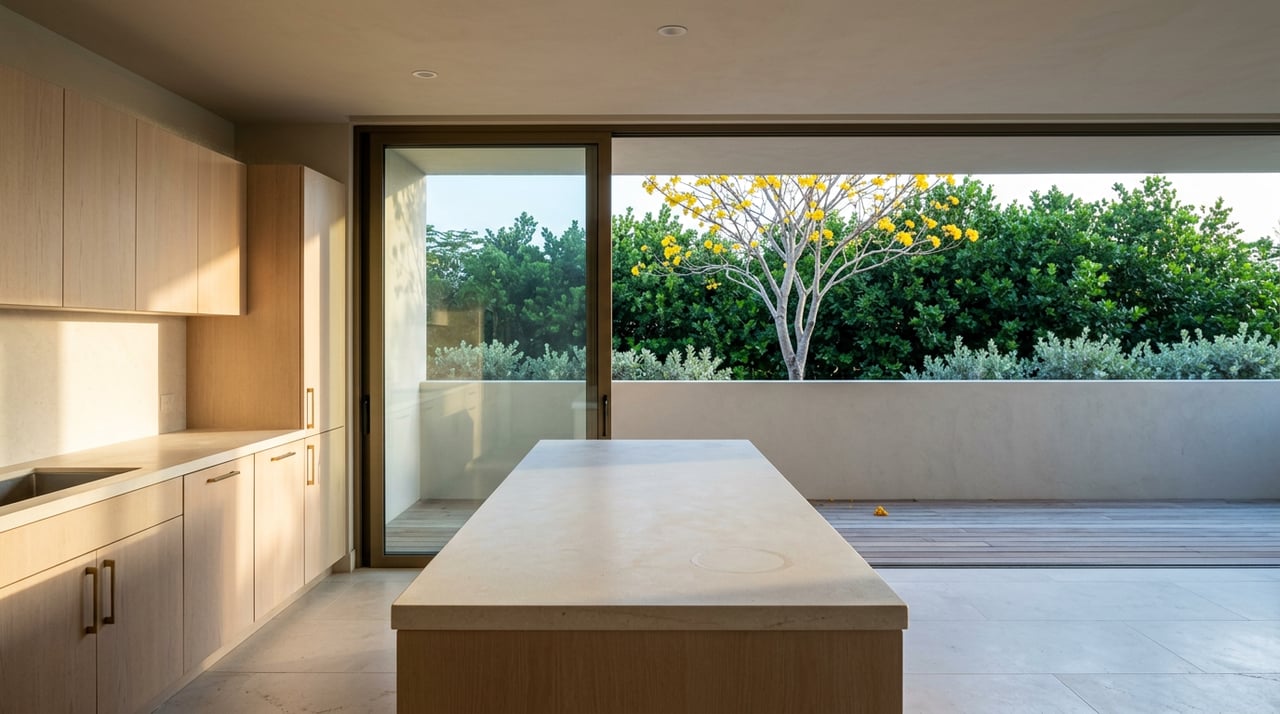
A single sentence on Grace Bay Resorts' own project page does more to explain the current construction boom than any brochure copy about infinity pools or Italian porcelain tile. It states, in essence, that buyers looking for a retirement home or a purely private residence are not the intended audience for The Point, the 58-home expansion now rising beside the long-running Point Grace resort. That is an unusual thing for a developer to say out loud about $2.1 million casitas and $11 million penthouses. It is also the clearest signal available right now about how Grace Bay's newest branded inventory is built to behave differently from a private villa purchase.
The distinction matters more in August 2026 than it would have two years ago, because Turks and Caicos is heading into a market split. Grace Bay Resorts CEO Mark Durliat, speaking to Caribbean Journal in a conversation published January 23, 2026, described 2025 as a year when a wave of new private villa investment pushed occupancy and average daily rates down across the island's unbranded rental stock. His outlook for 2026 was specific: the branded resort product should find firmer footing, while the private villa rental market cools as the destination absorbs the recent surge in supply. That is not a generic warning about oversupply. It is a distinction between two ownership structures that are now competing for the same buyer, and only one of them comes with an engineered demand floor.
The Deal That Built the Requirement
The mechanism behind that floor is a Development Agreement between the Turks and Caicos government and Grace Bay Resorts, the developer behind The Point. In exchange for meaningful relief on import duties during construction, the developer's own materials describe an expectation that the finished units will generate reliable accommodation tax revenue, which in practice means the units have to be available to rent. This is not a soft suggestion. The project's own materials state plainly that owners will be required to participate in the Point Grace rental program, and that the entire amenity investment, the new adults-only pool, the oceanfront restaurants, the expanded spa, depends on that active rental base to make financial sense.
That is the origin of the sentence that opens this piece. A buyer chasing a quiet, mostly vacant second home is working against the structure the government and developer built together. A buyer comfortable with professional management placing the unit into a rental pool for a meaningful share of the year is exactly who the deal was designed for.
Two Projects, Two Very Different Ownership Structures
Grace Bay currently has two branded residential projects under active construction, and they solve the ownership question in different ways.
The Point sits on 9.5 acres next to the existing Point Grace resort. Construction began in February 2024, and by the CEO's January 2026 remarks the oceanfront buildings had reached the third level, with a fourth-level pour and interior fit-out following through the spring. The original target was completion in late 2026, but given the pace of construction reported through the first half of the year, a 2027 delivery looks more realistic than the original date. Inventory is genuinely scarce: of 58 total homes, split between 42 oceanfront condominiums and 16 private casitas, only 8 condominiums and 7 casitas remained as of that January interview, seven months ago as of this writing. Ownership at The Point comes in two forms, condominiums under a standard strata regime and casitas sold as a land parcel paired with a construction contract, each carrying homeowner fees that the developer has not yet finalized. Owners are told to expect an estimate closer to completion, based on actual costs at that time, which is a detail worth sitting with if you are trying to model carrying costs today.
Kempinski Grace Bay takes a different shape. Developer JTRE broke ground on the 11-acre beachfront site in November 2025, and by early August 2026 the project had reached vertical construction, with crews forming second-floor sections across several buildings and a tower crane now standing on site. The residential program spans 123 total units, 119 residences ranging from 568-square-foot studios to 3,200-square-foot three-bedroom homes, plus four standalone oceanfront villas, with completion targeted for the first quarter of 2028. Kempinski's ownership terms lean toward flexibility rather than a strata regime: the project's materials describe no restrictions on foreign ownership and fee simple ownership as an available structure, which is a meaningfully different legal foundation than The Point's rental-linked strata setup.
| The Point at Point Grace | Kempinski Grace Bay | |
|---|---|---|
| Developer | Grace Bay Resorts | JTRE |
| Site | 9.5 acres | 11 acres |
| Total units | 58 (42 condos, 16 casitas) | 123 (119 residences, 4 villas) |
| Unit sizes | Two- to five-bedroom condos and casitas | 568 sq ft studios to 3,200 sq ft three-bedroom residences |
| Pricing at launch | Casitas from $2.1M; condos $3.2M-$4.2M; penthouses to $7M; corner penthouses at $11M | Not yet publicly disclosed |
| Construction stage | Third level in January 2026, fourth-level pour underway by May 2026 | Vertical construction confirmed in August 2026 |
| Target completion | Originally late 2026, now trending toward 2027 | First quarter of 2028 |
| Ownership structure | Strata condos or casita land parcel plus construction contract | Fee simple available |
The Payment Schedule Tells You What You're Actually Buying
Kempinski's construction payment structure, published on the project's own terms sheet, is worth reading closely because it lays out exactly when your capital is exposed and to what.
For a branded residence, the schedule runs:
- 10 percent upon execution of the Sale Purchase Agreement
- 15 percent when construction commences
- 15 percent on completion of the unit's floor slab, expected between April and October 2026
- 15 percent on completion of the building roof, expected between August and November 2027
- 45 percent at closing and certified completion, expected January 2028
Villa buyers on the same site follow a heavier front-loaded schedule tied to a 0.5-acre lot purchase and a separate construction contract, with 25 percent due at both the roof and floor slab stages rather than 15 percent. The difference is not cosmetic. A branded condominium buyer carries most of the financial exposure until the very end of the timeline. A villa buyer commits more capital earlier, in exchange for a standalone structure and, per the ownership terms, full access to hotel amenities and services regardless.
What This Actually Changes for a Comparison Shopper
If you are weighing a pre-construction unit at The Point or Kempinski against a private villa resale elsewhere in Grace Bay, the CEO's own framing suggests the real question is not which building has the better finish package. It is which ownership structure gives you a built-in renter base backed by a government agreement, versus which one leaves you competing directly in an unbranded rental market that just absorbed a supply surge.
That trade-off cuts both ways. The rental mandate at The Point removes flexibility. You are not buying a home you can simply lock and leave empty for eleven months. In return, you are buying into a structure the government has a direct interest in keeping occupied, and a resort operator with two decades of Turks and Caicos experience managing the rental side for you. A private villa gives you full control over how and whether the property is rented, but that control comes without the institutional demand support that appears to be cushioning branded product through 2026's softer stretch.
A Few Questions Worth Asking Before You Sign
Does the rental requirement mean I can never stay in my own unit? The developer's materials describe required participation in an active rental program and confirm that all owners keep the right to use resort amenities and services, but they do not spell out a specific number of personal-use weeks. That is a detail worth asking about directly rather than assuming.
Are HOA or strata fees locked in at these prices? Not yet, at least at The Point. The developer has stated that fee estimates will follow closer to construction completion, based on actual operating costs at that time, which means early buyers are committing to a payment schedule before the full carrying-cost picture exists.
Why would a developer discourage certain buyers outright? Because the entire amenity and financing model, including the government's import duty relief, depends on the units generating consistent rental and accommodation tax revenue. A unit sitting empty most of the year works against the structure the whole project was built on.
The fine print on Grace Bay's newest towers is not a warning to avoid them. It is a description of what kind of ownership you are actually entering, and in a year when the CEO building these projects is telling the market directly that branded, rental-backed inventory is expected to outperform private villas, that fine print is doing real work. If you are weighing a pre-construction unit against a resale villa and want a clear read on which structure fits your plans, Nina Siegenthaler can walk through the actual numbers, payment schedules, and rental terms specific to what is currently available. Let's Connect.