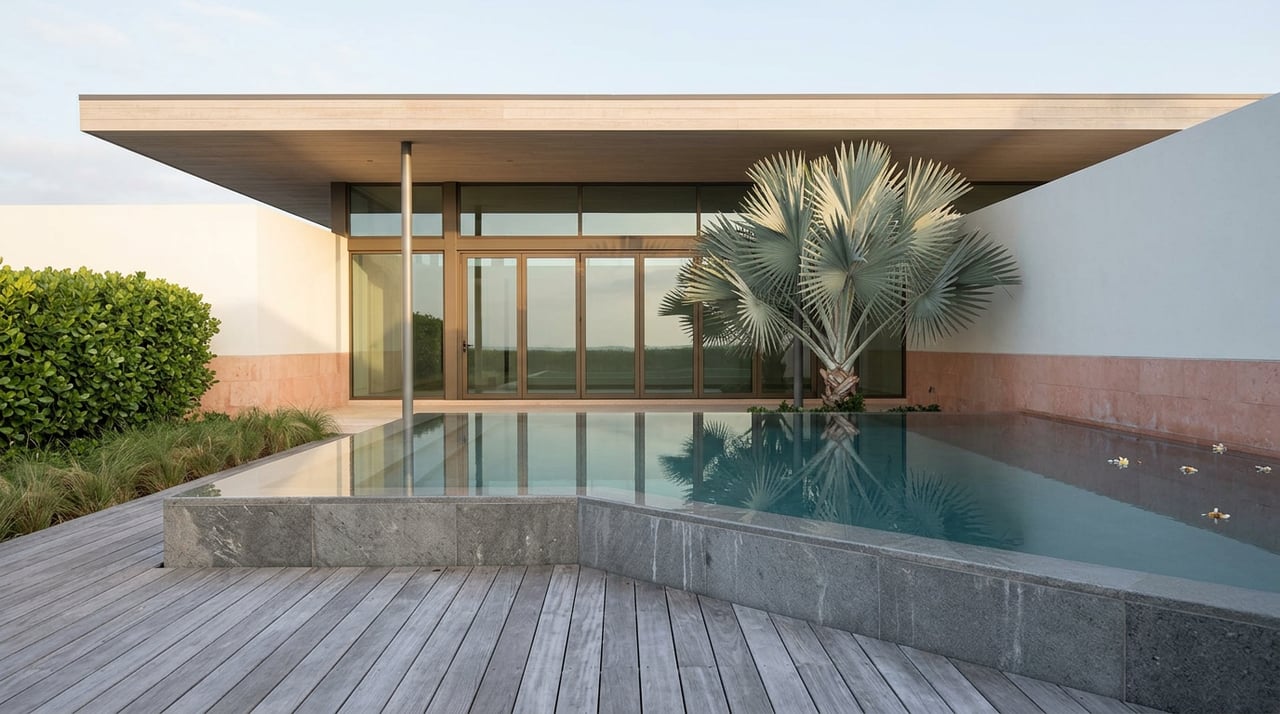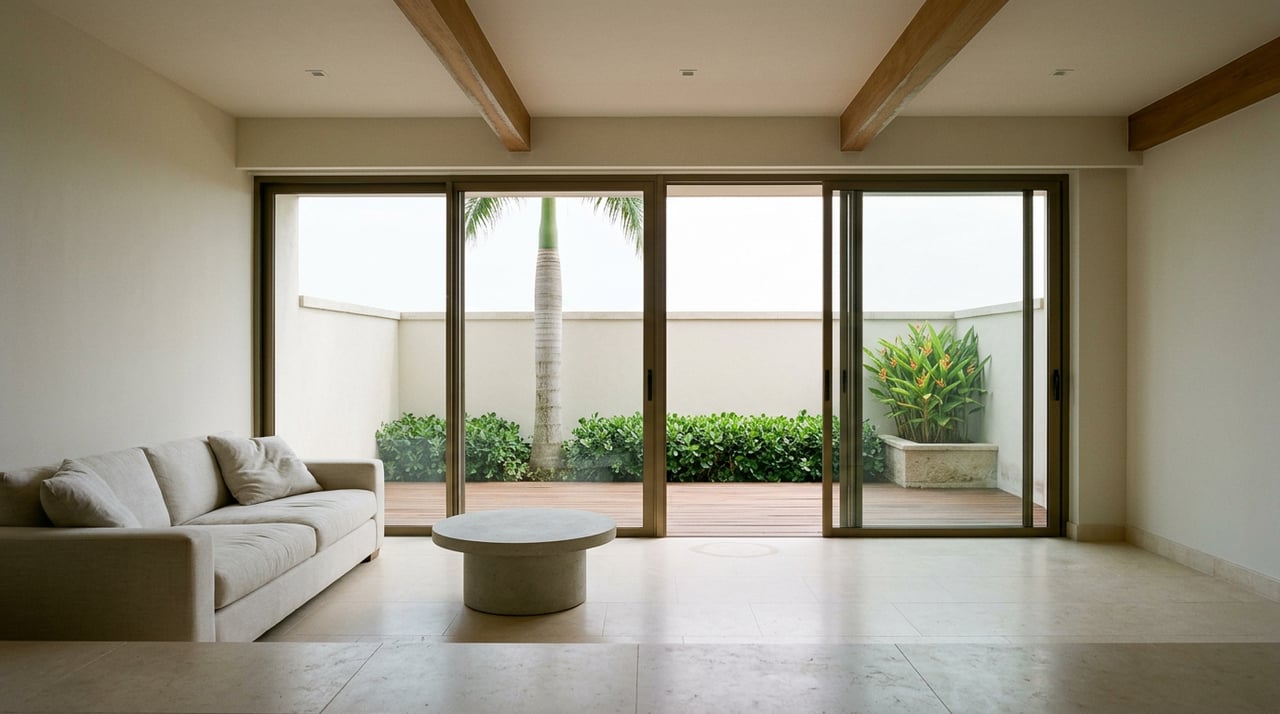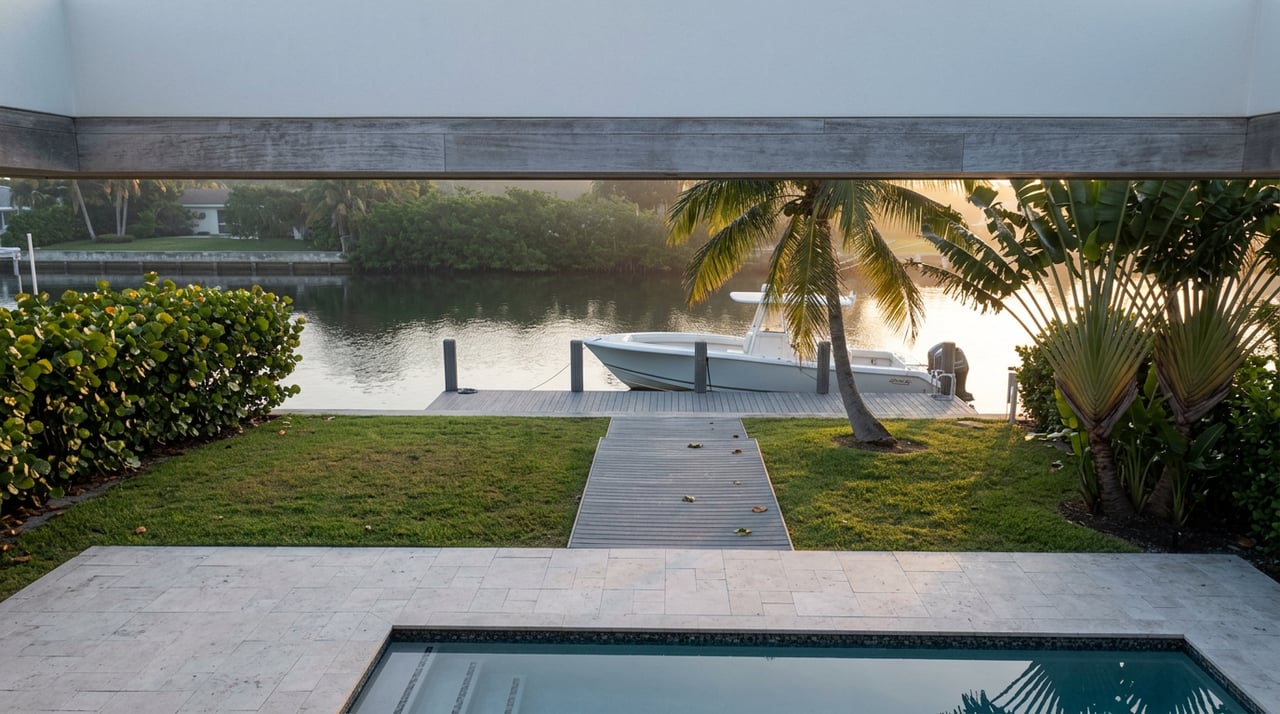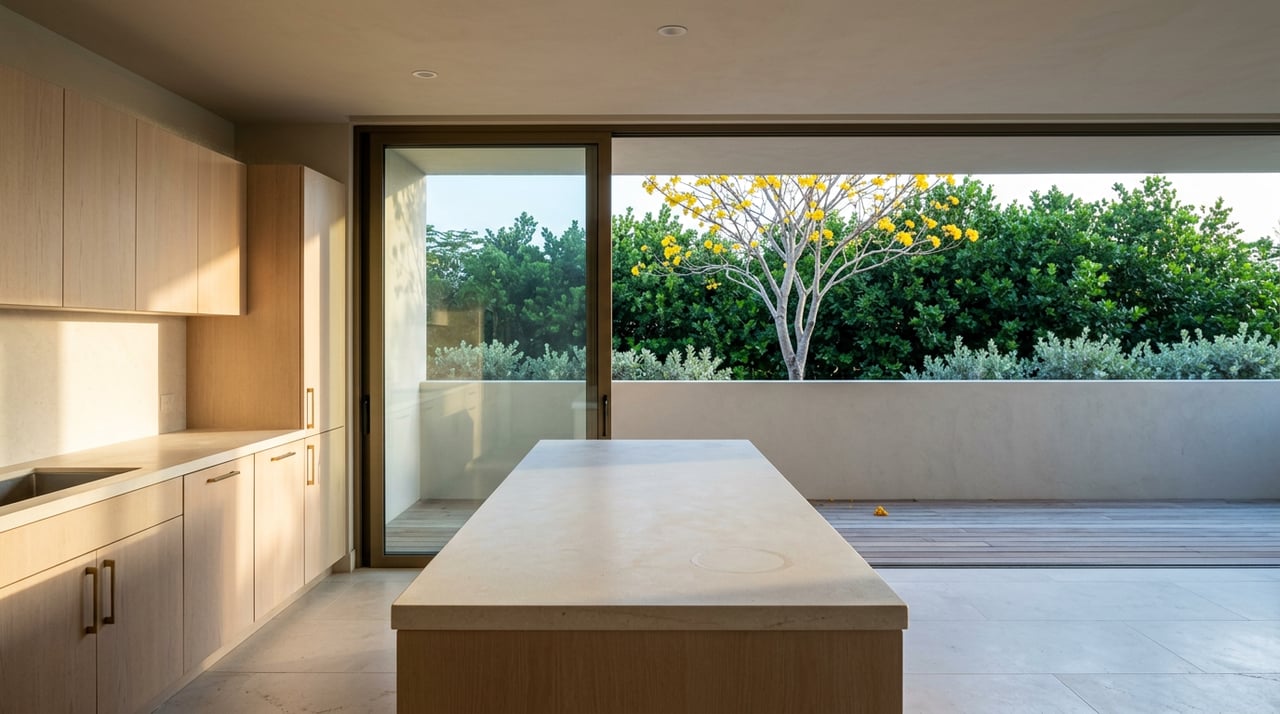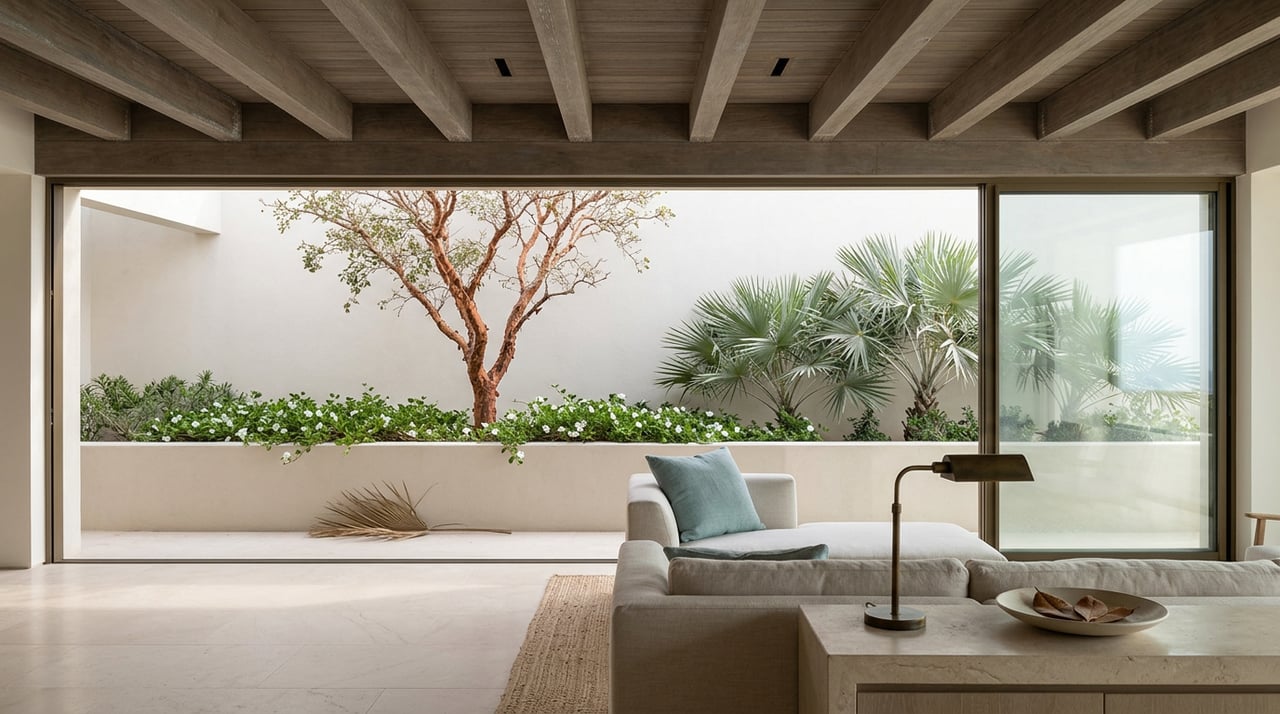
Stand on the terrace of a bluff-top villa in Beach Enclave North Shore and someone will eventually walk you down a staircase carved into the limestone, forty feet of switchbacks ending on a stretch of sand the brochure calls virtually private. It is a fair word choice. It is also not quite true, and the gap between those two things is worth understanding before you write an offer.
Turks and Caicos law draws a hard line at the high-tide mark. Below it, the beach belongs to everyone. A homeowner on North Shore, or anywhere else in the country, cannot legally stop a stranger from walking, swimming, or sitting on the sand in front of their house. The government has gone as far as to formalize this: its National Beach Access Policy counts roughly 83 designated public beach accesses across the islands, each governed by a beach licence and set aside for public use and enjoyment. The official tourism authority puts it plainly: every beach in the country is public and free to access up to the high-tide point, generally where the vegetation begins.
So when a North Shore listing advertises a private beach, the accurate version of that sentence is: no one has figured out how to get to this particular stretch of sand except through my driveway.
What the staircase is actually selling
That distinction matters because it reframes the entire premium. You are not buying legal exclusion. You cannot buy legal exclusion anywhere in this jurisdiction. What North Shore's bluff-top parcels sell is engineered difficulty of access, and the engineering is doing real work.
Several of the elevated villas at Beach Enclave North Shore sit on hilltop lots that rise up to 65 feet above the water, each on close to an acre, with private staircases and dedicated beach decks built specifically to get owners down to sand that has no public road anywhere near it. Another villa in the same development is set on a cliff with roughly 40 feet of elevation and a hundred feet of beachfront reached only by a private staircase cut into the rock. None of that changes who owns the wet sand at the bottom of the stairs. It changes how many people will ever bother to find it.
Compare that to Grace Bay or Leeward Beach, both flat, sandy, and threaded with marked public paths, both sitting inside the boundaries of the 6,532-acre Princess Alexandra National Park, declared in 1992 to protect the reef system and the beaches it shelters, including Grace Bay, the Bight, and Leeward Beach itself. The park designation there protects ecology. It does nothing to slow foot traffic, because the terrain was never a barrier to begin with. North Shore, stretching west from Turtle Cove through Babalua Beach and International Drive toward Blue Mountain, was the island's original enclave of private homes, the first residential development to take root in Providenciales decades before Grace Bay became a resort corridor. It sits just outside the park's formal footprint, and Beach Enclave's own marketing for the community leans on that adjacency, describing the site as bordered by the protected park land next door.
That border is quietly doing more for privacy than any deed could. Land inside a national park cannot be developed. A neighbor who can never build changes the character of a property more permanently than a fence.
Beachfront, oceanfront, and the difference that shows up at closing
Buyers comparing North Shore to Grace Bay or Long Bay often use beachfront as a catch-all term, and on this coastline the word hides three different products.
| Term | What it actually means | Where you'll find it |
|---|---|---|
| Beachfront | Sand reaches the property; you can walk out onto it | Grace Bay, Leeward Beach, parts of Long Bay |
| Oceanfront | Water view and access, but often over rock, coral shelf, or a bluff | Elevated North Shore parcels, some Turtle Tail sites |
| Ocean-view | Sight of the water without direct shore access | Set-back lots island-wide |
A parcel on the North Shore bluffs can be legitimately oceanfront, with a staircase engineered specifically to convert it into beachfront on the owner's terms. That engineering is a cost line, not a marketing flourish, and it belongs in your due diligence the same way a seawall or a dock would.
The version of this problem that ends up in court
North Shore's quiet is not the only way this story plays out in Turks and Caicos. Where beach access collides with commercial foot traffic, the results have been messier. A Commonwealth Lawyers Association analysis of the country's beach vending disputes describes escalating tension between vendors and neighboring landowners in the country's busier coastal stretches, tension serious enough that the government brought the Beach and Coastal Vending Ordinance into force in December 2021 to zone and license vending activity. The same analysis notes that in areas where vendors operate persistently, resale and rental value has suffered, in some cases badly enough that land became functionally difficult to sell.
North Shore has never needed that ordinance in the way a busy resort beach does. Its cliffs and lack of a through road already limit who shows up. The legal reality is identical everywhere in the country: the sand is public. The lived reality diverges entirely depending on whether the terrain and the road network cooperate.
What to check before you make this trade
If you're weighing a bluff parcel here against a flat beachfront lot elsewhere on the island, a few questions separate a good staircase from an expensive one.
- Who owns the staircase and the land it crosses, and is that documented as part of the title rather than a verbal understanding with a prior owner
- What is the current condition of the limestone the stairs are cut into, since erosion and salt exposure are ongoing costs on an exposed cliff face in a way they are not on a flat sandy lot
- Is the neighboring parcel that currently reads as undeveloped actually inside the national park boundary, or simply unbuilt for now
- Does the property's insurance and any resale disclosure address wave or storm exposure differently for a bluff-top structure than it would for a beach-level villa
None of these questions have a universally right answer. They just change what the premium is actually buying, and a buyer who asks them walks into a negotiation from a stronger position than one who assumes private beach means what it sounds like it means.
The trade you're actually making
The real comparison isn't North Shore against Grace Bay on price per square foot. It's engineered seclusion against effortless access, and both have a cost. Grace Bay's flat, public-friendly shoreline means more people, more noise on a busy week, and a beach that will always be shared in practice as well as in law. North Shore's cliffs and staircases buy quiet that has nothing to do with a title deed and everything to do with how hard the beach is to reach on foot. Once you see the mechanism, the premium stops looking like it's for the sand. It's for the forty feet of elevation between you and everyone else who is, legally, allowed to be there too.
If you're comparing North Shore to Grace Bay, Leeward, or Long Bay and want the specific parcels where this trade actually works in your favor, Nina Siegenthaler has walked these bluffs enough times to tell you which staircases are worth the climb. Let's connect.